
To understand Slovenia, you need to taste it. Culinary here is not only a source of nourishment but a reflection of history, geography, and community. From celebration desserts baked once or twice a year to humble dishes that fueled farmers for centuries, Slovenian cuisine captures the spirit of the people and the land.
This article introduces the signature dishes every traveler should know—from sweets like Potica and Prekmurska gibanica to savory icons like Kranjska klobasa (Carniola sausage) and rustic stews.
Traditional slovenian desert - Potica. Source: turisticnekmetije.si
Potica – The queen of Slovenian desserts
No Slovenian celebration is complete without potica. This rolled pastry, filled most commonly with walnuts, is a symbol of abundance and family unity.
Origins: The word comes from “poviti,” meaning “to roll.” Potica dates back at least to the 16th century and was baked during Easter, Christmas, and weddings.
Varieties: While walnut is most traditional, there are dozens of fillings—poppy seeds, tarragon, hazelnuts, honey, or even savory options like cracklings (ocvirki).
Cultural meaning: Potica is more than food—it’s a ritual. Grandmothers pass down family recipes, and many Slovenians argue passionately about which filling is “the best.”
👉 Traveler’s tip: Try potica at a bakery in Ljubljana’s old town or join a cooking workshop in the countryside to learn how to roll it yourself.
Kranjska klobasa – Carniolan sausage
Protected by the EU as a product of geographical indication, Kranjska klobasa is a true Slovenian ambassador.
Ingredients: Pork, bacon, garlic, salt, and pepper. Nothing more, nothing less.
Tradition: Smoked lightly and served with mustard and bread, this sausage has been a part of Slovenian diets since at least the 19th century.
Symbolism: It represents simplicity, honesty, and the Slovenian way of using every part of the animal.
👉 Did you know? Even astronauts have eaten Carniolan sausage—it was taken on a space mission as a symbol of Slovenian heritage.
Prekmurska gibanica – A rich layered masterpiece
From the far northeast comes Prekmurska gibanica, a dessert so rich it is protected by the European Union as a dish of “traditional specialty guaranteed.”
Layers: Poppy seeds, apples, walnuts, cottage cheese, and cream, repeated in multiple tiers.
Flavor: Sweet, nutty, tangy, and creamy, all at once.
Occasion: Once reserved for weddings and holidays, today it is enjoyed in restaurants across Slovenia.
👉 Traveler’s tip: The best place to taste gibanica is, of course, in Prekmurje itself, often served with a glass of dessert wine.
Jota – Alpine comfort
Life in the Alps has always been tough, and food had to be hearty. Jota is the perfect example: a stew of sauerkraut, beans, potatoes, and smoked meat.
History: Originating as peasant food, it reflects the need to preserve ingredients for long winters.
Taste: Sour from the sauerkraut, earthy from beans, and smoky from pork.
Modern touch: Today, chefs sometimes give jota a refined twist, but it remains a humble favorite in mountain huts.
Žganci – Buckwheat spoonbread
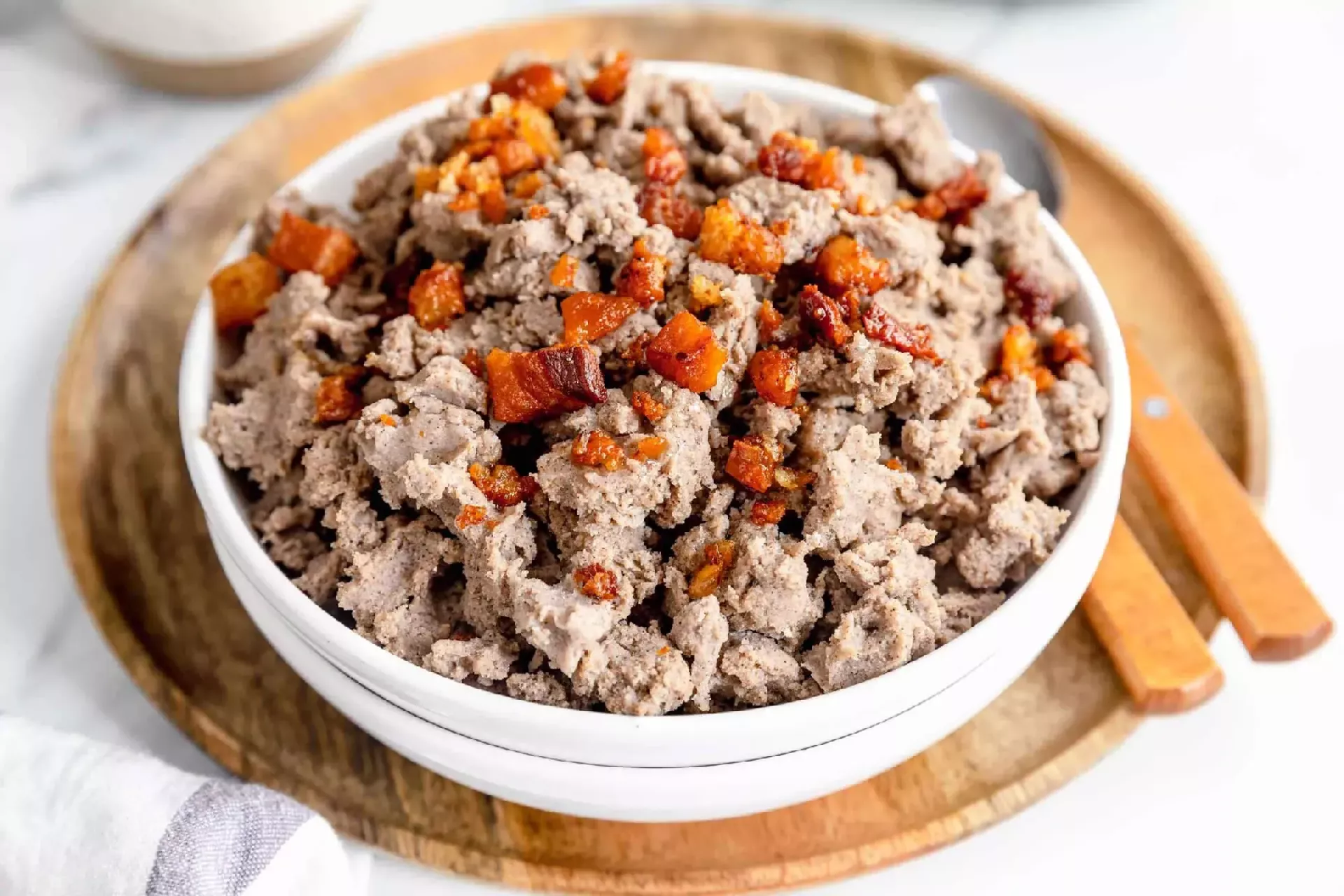
Often called Slovenia’s “national dish,” žganci are made from buckwheat or corn flour and hot water. Simple, but deeply beloved.
Traditional serving: With sour milk, mushroom sauces, or topped with cracklings.
Symbolism: Žganci embody the resilience of Slovenians—making something nourishing out of modest ingredients.
Buckwheat spoonbread, lies in a heart of slovenian traditional cousine. Source: Jernejkitchen.com
Health note: Buckwheat is gluten-free and full of nutrients, making žganci a surprisingly modern dish.
Idrijski žlikrofi – Little hats with big flavor
These small dumplings from the mining town of Idrija look like tiny hats.
Filling: Potatoes, onions, and herbs.
Recognition: Protected by the EU as a geographical specialty.
Tradition: Served with a rich lamb sauce, they reflect the town’s mining heritage, where hearty yet affordable meals were essential.
Štruklji – Rolled versatility
Štruklji are rolled dough dishes that can be sweet or savory.
Fillings: Cottage cheese, walnuts, apples, tarragon, or poppy seeds.
Cooking methods: Boiled, baked, or steamed.
Use: They can be main dishes, side dishes, or desserts—truly versatile.
👉 Did you know? There are over 80 documented varieties of štruklji in Slovenia.
Blejska kremšnita – The cream cake of Lake Bled
Since the 1950s, Bled has been famous for its kremšnita—a cream cake combining puff pastry, vanilla custard, and whipped cream.
Tourist icon: More than 20 million slices have been sold at Lake Bled.
Tradition: Visitors often consider it a rite of passage to eat kremšnita while looking at Bled’s island church and castle.
Sauerkraut and Turnip – The fermented staples
Fermentation has long been a way to survive Slovenian winters. Sauerkraut (kislo zelje) and sour turnip (kisla repa) are cornerstones of the cuisine.
Uses: As stews, side dishes, or fillings for dumplings.
Nutrition: Packed with probiotics and vitamins, they are both practical and healthy.
A cuisine of memory and pride
Together, these dishes form the backbone of Slovenian culinary identity. They are eaten in humble kitchens and celebrated at festivals. They tell stories of survival, celebration, and creativity.
For travelers, trying them is more than eating—it’s tasting Slovenia’s history.
Practical tips for travelers:
Try regional versions. Potica tastes slightly different in every household; štruklji vary from valley to valley.
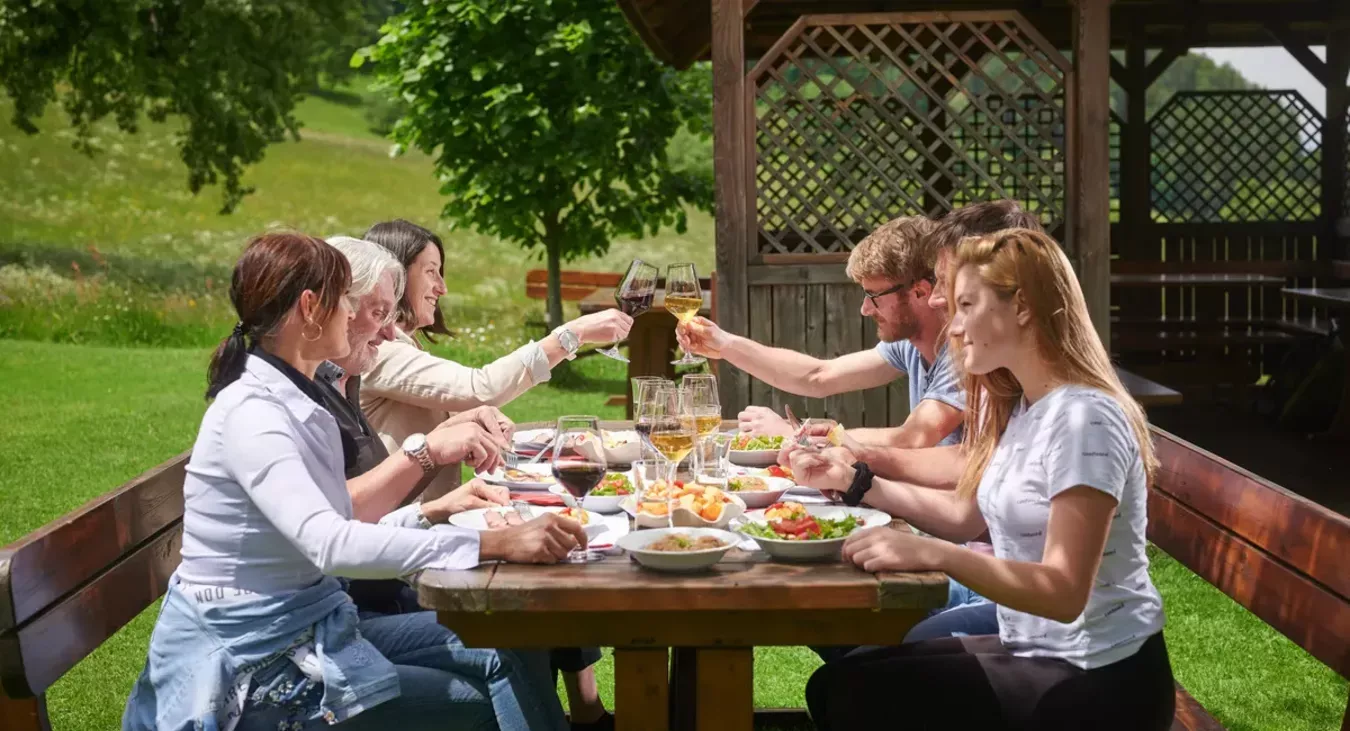
Visit a tourist farm. The best way to sample traditional food is in a family-run farmhouse (turistična kmetija).
Don’t skip desserts. Even if you’re full, Slovenians will always insist you have “just a small piece.”
Dinner on slovenian family run farmhouse. Source: slovenia.info
👉 Slovenia’s cuisine is a journey through its soul. From the richness of gibanica to the simplicity of žganci, each dish is a piece of heritage. Come hungry, and you will leave with much more than a full stomach—you’ll leave with stories.
Sep 10, 2025