In Slovenia, eating is more than sustenance. It is a way of bringing people together, a cultural expression, and a marker of the seasons and life’s milestones. From holiday feasts that symbolize prosperity to the simple ritual of a Sunday family lunch, gastronomy here is inseparable from customs and traditions.
Travelers who want to understand Slovenian life should not only taste the food but also experience the occasions around it. Meals in Slovenia are deeply social, and the customs surrounding them reveal much about the national character.
Christmas – A table of abundance
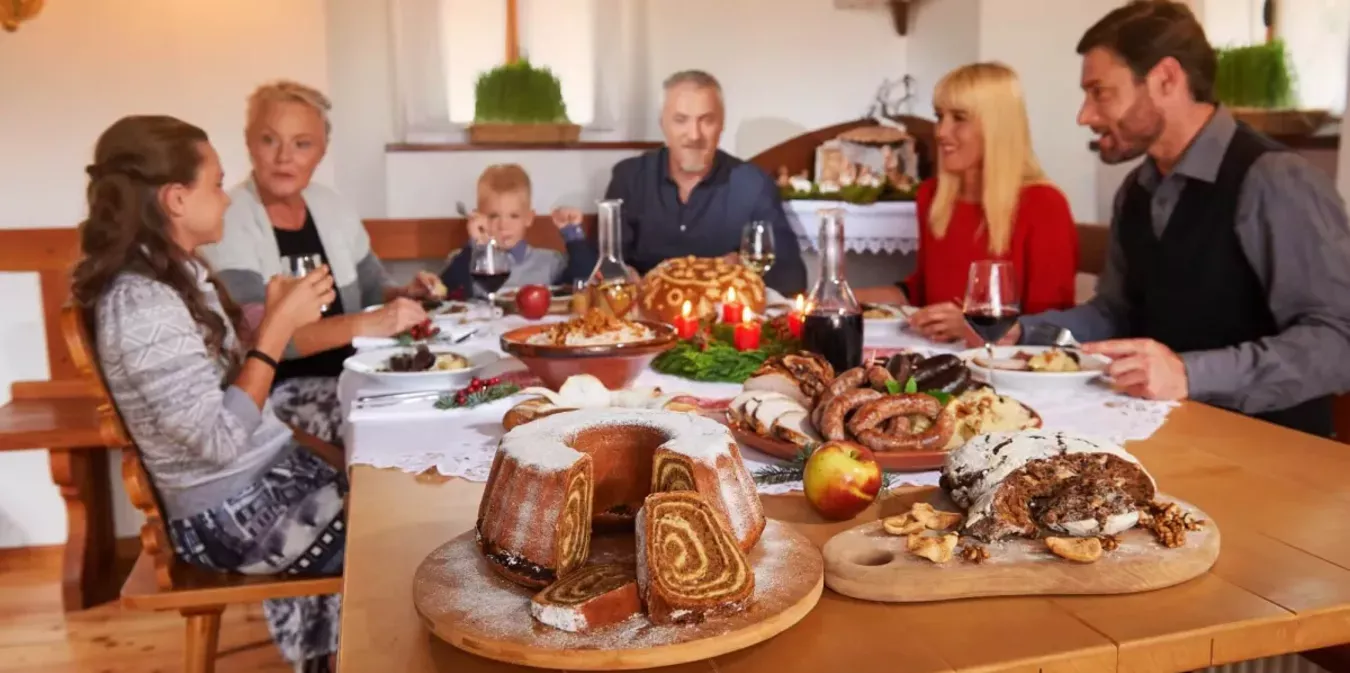
Christmas in Slovenia is celebrated with a table full of symbolic dishes.
Potica: The centerpiece of the holiday table. The rolled cake with walnut, poppy seed, or tarragon filling is a symbol of abundance and harmony. Every household prides itself on its own recipe.
Roast meats: Pork or poultry is often served with potatoes and seasonal vegetables. Goose or duck appear in certain regions.
Festive bread: In many rural areas, families bake round loaves marked with a cross, blessed at church and shared on Christmas Eve.
Cookies and sweets: Honey cookies, dried fruit, and homemade chocolate treats round out the feast.
Christmas meals are not only about eating—they are about blessing the household and gathering the family. For travelers invited to a Slovenian Christmas dinner, it is a chance to witness warmth and generosity in action.
For Christmas families in Slovenia gathers and traditional cousine is in front, accompined with selected wines. Source: Slovenia.info
Easter – A basket of symbols
Easter is one of the most important culinary holidays in Slovenia. Families prepare a special basket filled with foods, each carrying meaning:
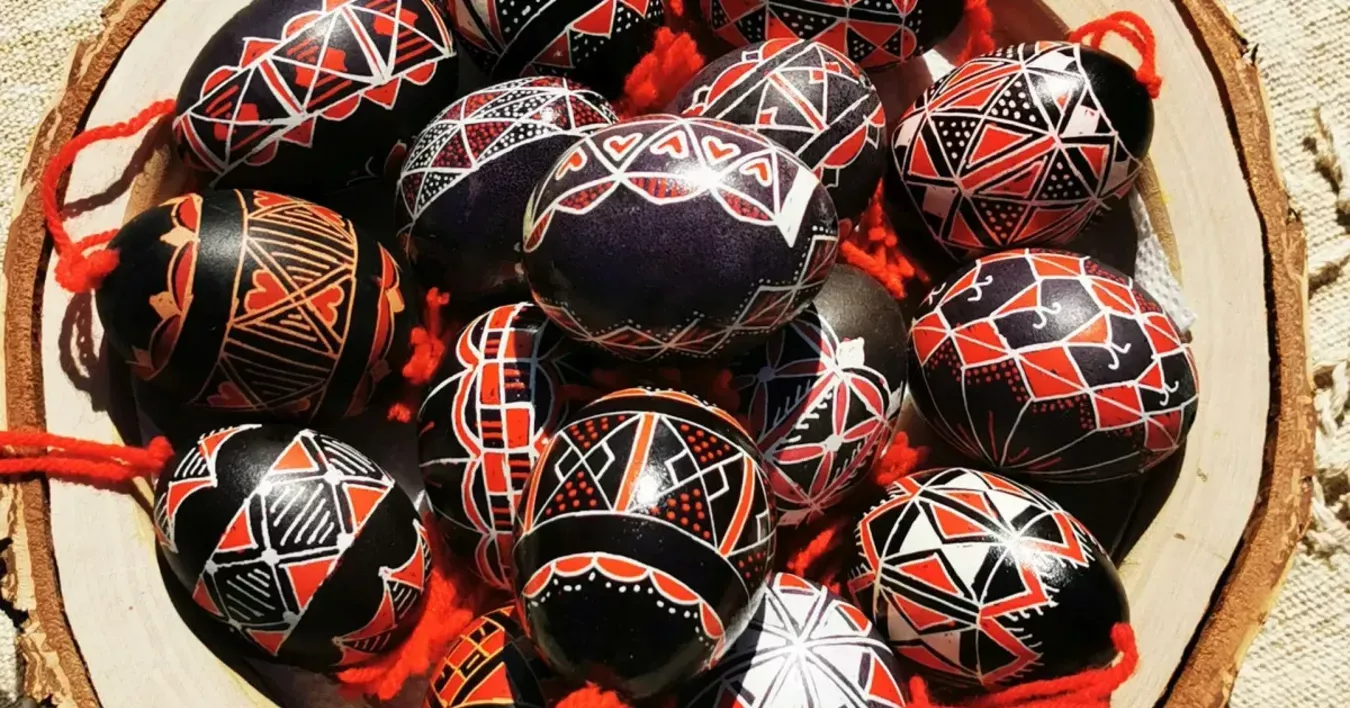
Pirhi (decorated eggs): Symbols of life and renewal.
Ham and horseradish: Represent strength and endurance.
Potica: Once again takes pride of place as a symbol of prosperity.
Bread: Round loaves symbolize wholeness and unity.
These baskets are taken to church for blessing before being shared at the Easter table. Many towns also host processions and community feasts.
👉 Traveler’s tip: If visiting during Easter, look for local markets selling beautifully decorated eggs. Some regions use wax-resist techniques or intricate hand-painting.
In region Bela krajina for hunderets of years people decorate eggs on Easter in their own way. Source: Slovenia.si
Sunday lunch – The weekly tradition
Beyond holidays, Slovenians treat Sunday lunch almost like a ritual. It is the time when families gather, even across generations, to share a hearty meal.
Typical menu: Soup (often beef or chicken broth with noodles), roasted meat (pork, beef, or chicken), potatoes, seasonal vegetables, and salad. Dessert is usually strudel, potica, or simple cakes.
Symbolism: Sunday lunch represents rest, family unity, and respect for tradition. Even busy urban families try to maintain this weekly custom.
👉 Did you know? In surveys, many Slovenians say Sunday lunch is their most important family tradition—more so than any holiday.
Weddings and life milestones
Weddings, christenings, and anniversaries are marked by lavish meals that can last for hours. A wedding culinary may feature dozens of courses, from soups and roasts to regional specialties.
Special pastries: Potica and štruklji are almost always included.
Drinks: Wine flows freely, and a shot of brandy is often given to guests as a welcome.
Hospitality: Guests are expected to eat heartily—refusing food may be considered impolite.
Other milestones, such as christenings or even funerals, are also occasions for shared meals. Food in Slovenia comforts, celebrates, and binds communities together.
Hospitality – “There’s always place for one more”
One of the most charming aspects of Slovenian food culture is hospitality. Visitors, whether planned or unexpected, are always offered something to eat or drink.
In rural areas: A guest might be greeted with schnapps (žganje) and homemade bread.
In cities: Coffee and cake are the standard welcome.
At farms: Guests may be served a full meal, even if they only intended to stop briefly.
This tradition reflects a deep cultural value: sharing food means sharing life. For travelers, it means that entering a Slovenian home often comes with the gift of genuine warmth.
Seasonal celebrations
Cousine also marks seasonal events throughout the year.
St. Martin’s Day (Martinovanje): On 11th of November, grape must officially “becomes wine.” Table shares roast goose, dumplings, and red cabbage accompany the first tasting of the new wine.
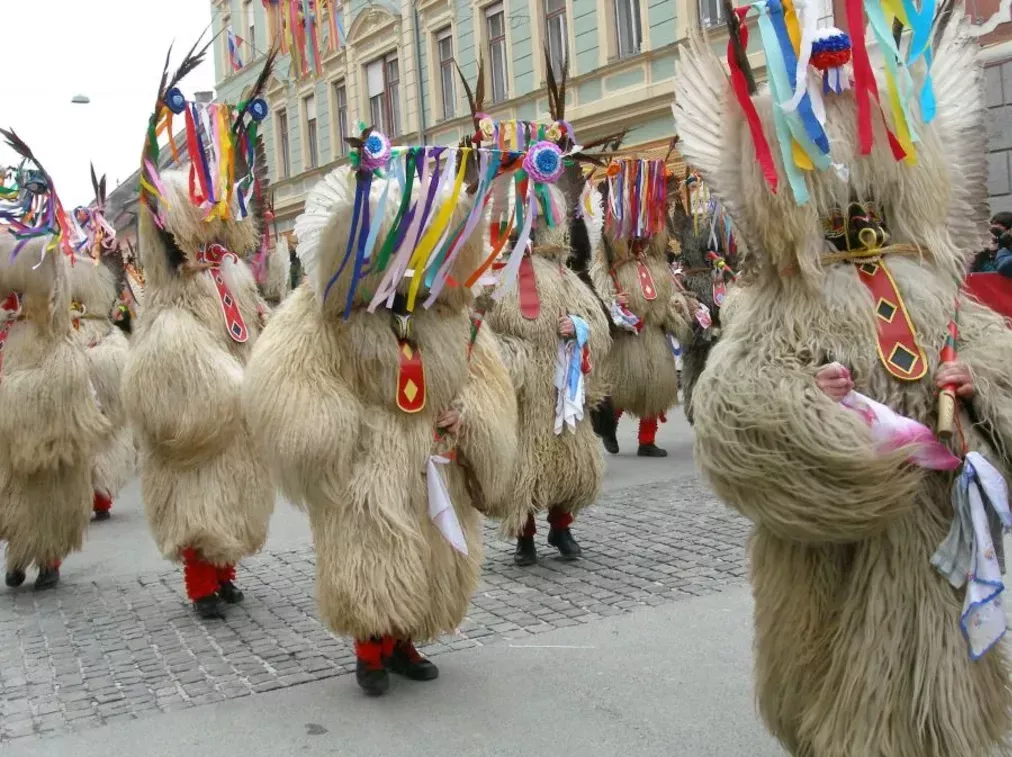
Carnival (Pust): Before lent, Slovenians eat rich foods like krofi (jam doughnuts) and sausages. Costumed parades, especially in Ptuj, celebrate abundance before the fasting season.
Typical carnival masks - Kurents. Their task is to chase away the winter. Source: Slovenia.si
Harvest festivals: In autumn, towns and villages host fairs with roasted chestnuts, wine, and local delicacies.
These customs keep communities tied to the cycles of agriculture and faith, reminding people of their roots.
The role of cousine in Slovenian identity
For Slovenians, cousine is not just sustenance—it is memory. The taste of potica recalls childhood holidays. The smell of roasted chestnuts brings autumn streets to life. A sip of Cviček at a vineyard cottage evokes summer evenings with friends.
Cousine is also cultural ambassador. Carniolan sausage, potica, and Prekmurska gibanica are promoted internationally as symbols of Slovenian identity, connecting the country to Europe while asserting its uniqueness.
Practical tips for travelers:
Accept hospitality: If a host offers you food or drink, even a small taste is appreciated.
Look for local customs: Visit during St. Martin’s Day or Carnival to experience cousine-centered festivals.
Try a tourist farm (turistična kmetija): These family-run farmhouses serve traditional meals in the context of genuine Slovenian hospitality.
Don’t rush meals: Slovenians value slow dining, with time to talk and enjoy.
👉 Slovenian gastronomic customs remind us that food is not only about flavor. It is about sharing life, marking milestones, and showing respect to guests and family. Whether at a holiday table with potica and ham, at a Sunday lunch with roast and soup, or at a wedding ceremony with endless courses, Slovenian meals are moments of connection.
For travelers, joining in these customs is perhaps the most authentic way to taste Slovenia—not just with the mouth, but with the heart.
Sep 07, 2025