WINE-GROWING REGION WITH EXCEPTIONAL VINEYARD SITES
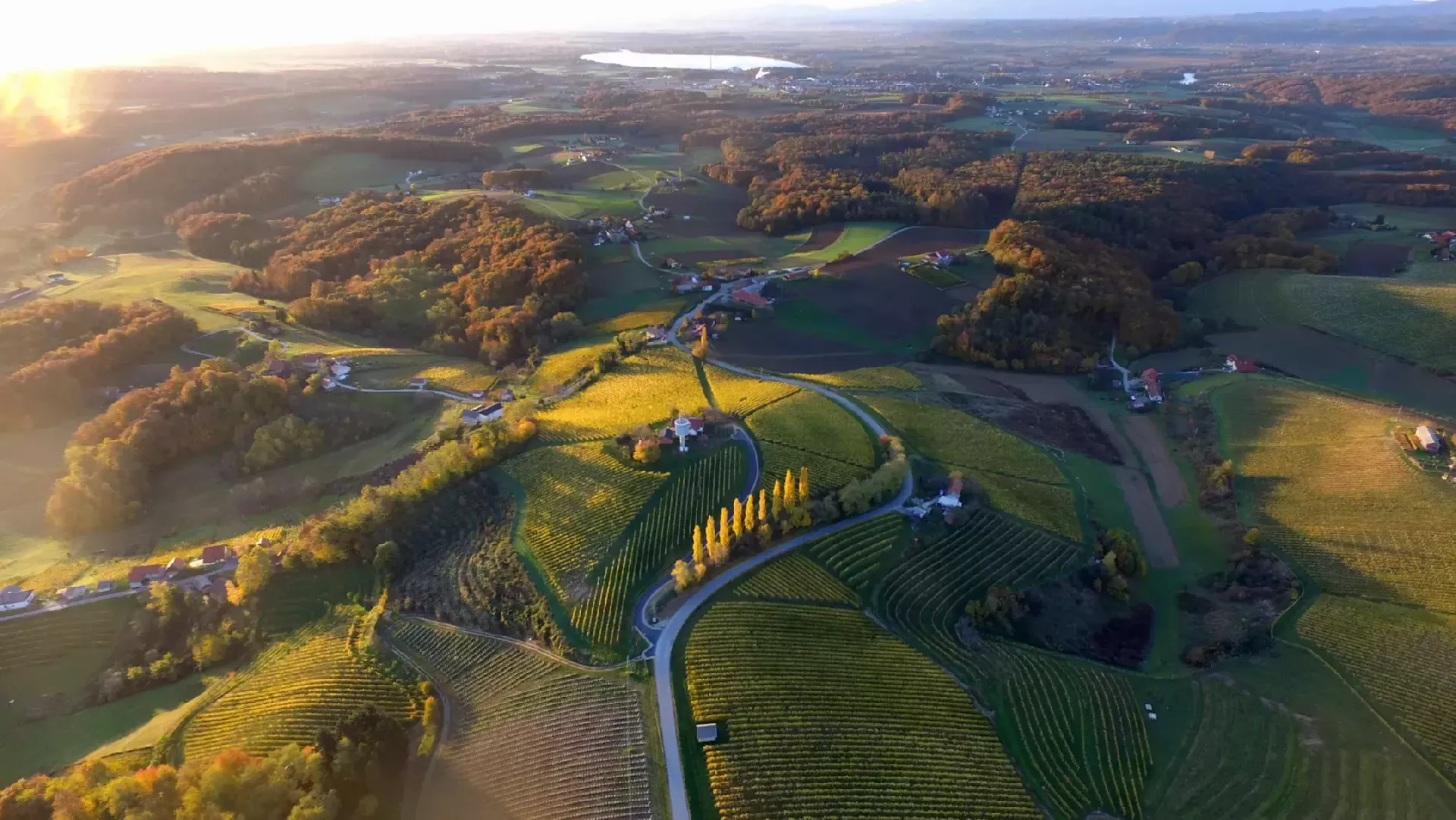
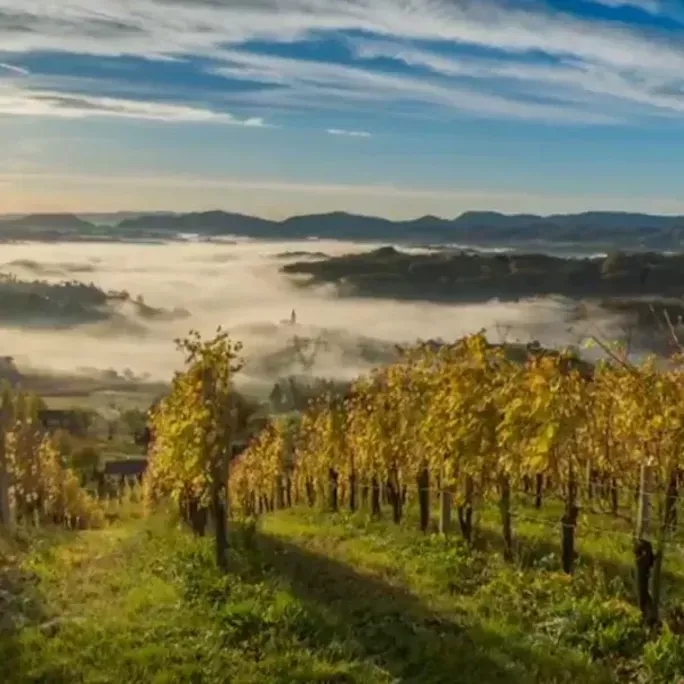
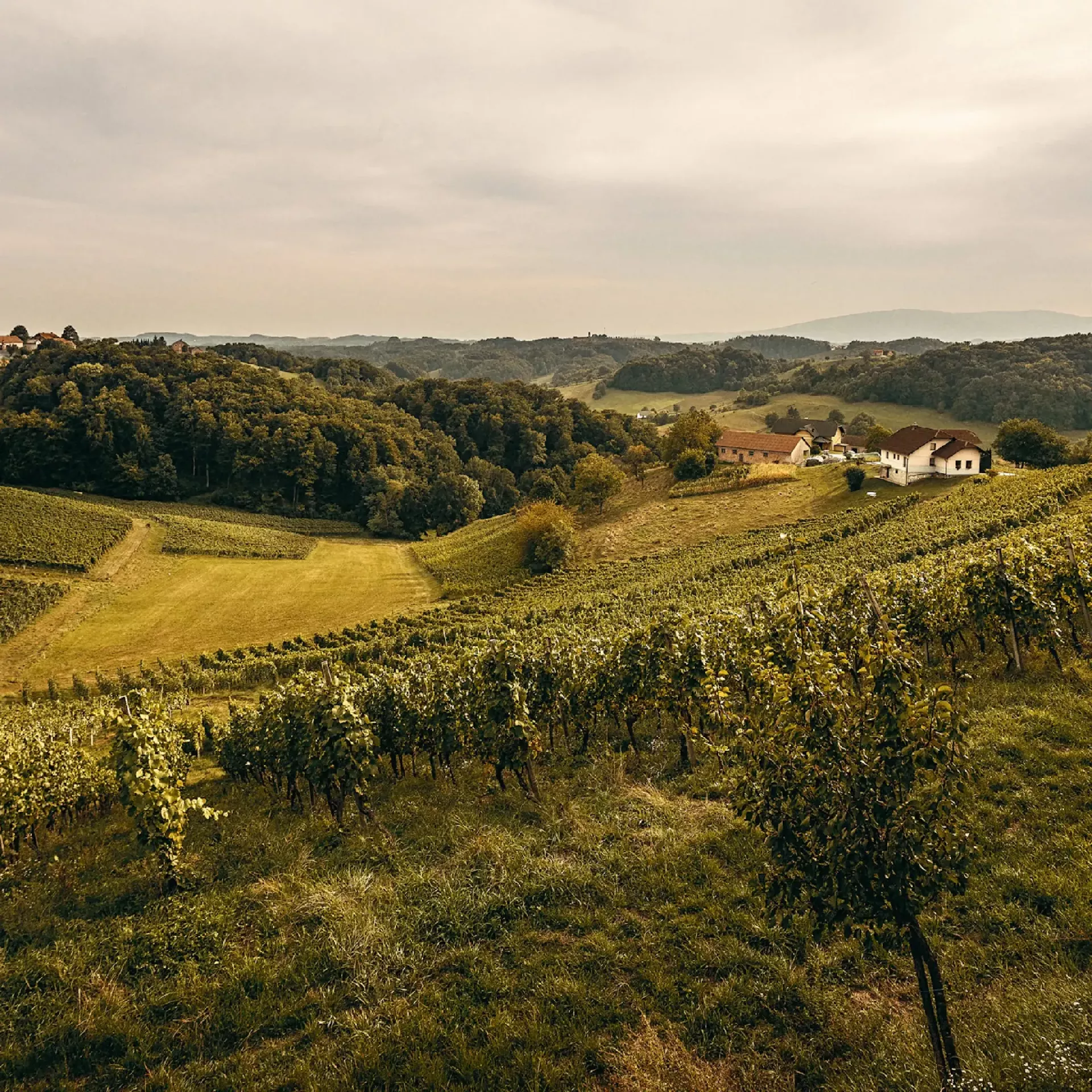
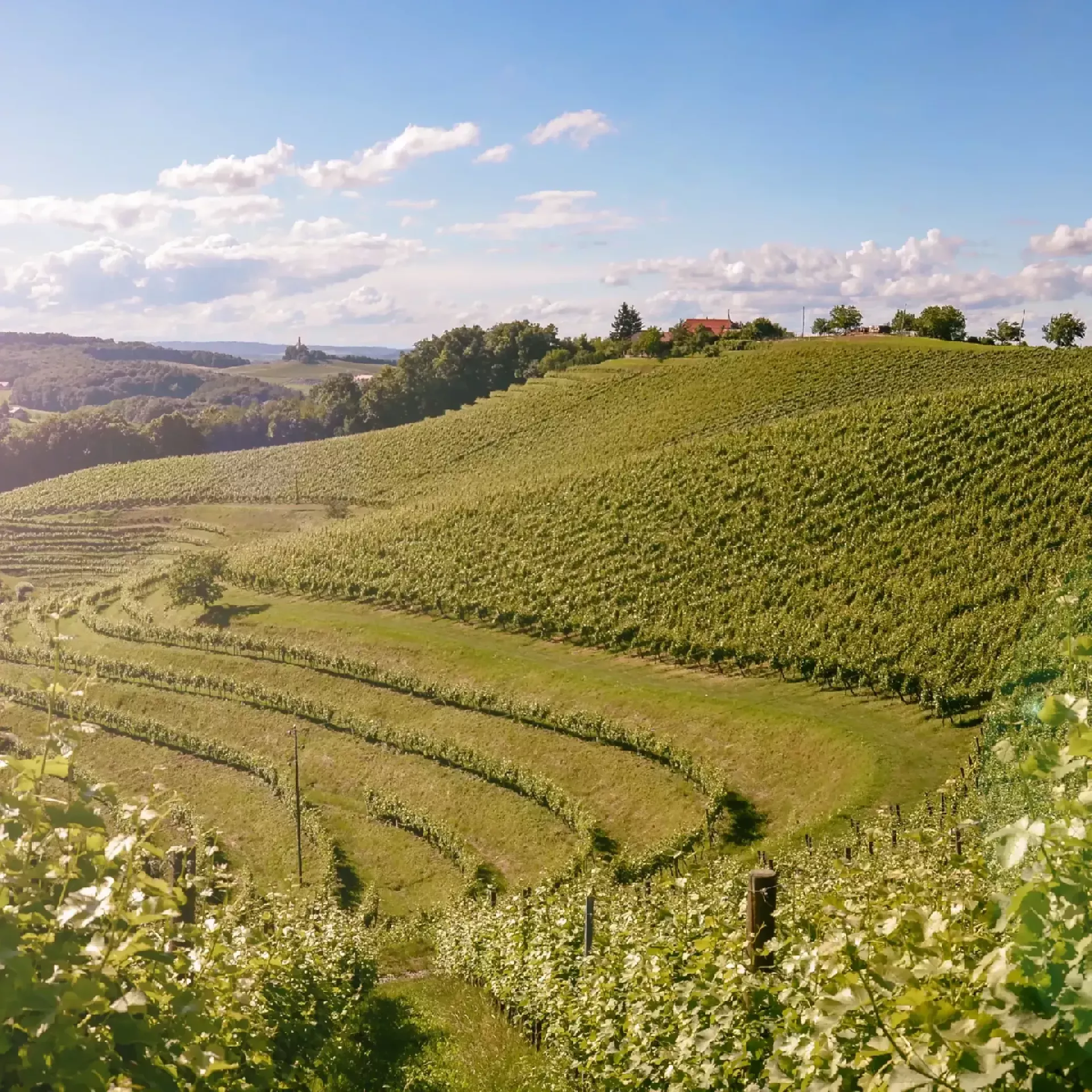
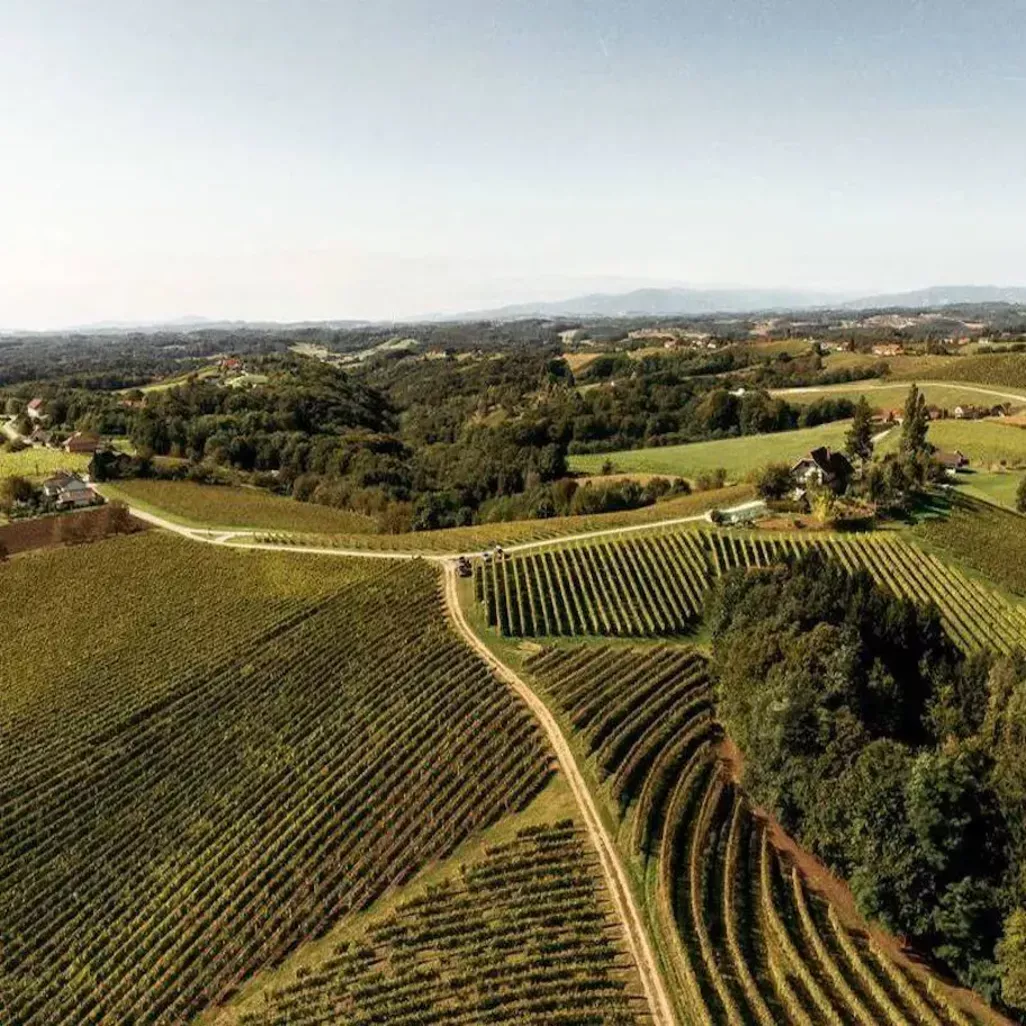
The Podravje wine-growing region, located in the northeast of Slovenia, is the largest and one of the most renowned wine regions in the country. Shaped by the cooler Pannonian climate, it is home to exceptionally aromatic, fresh, and elegant white wines, including the internationally acclaimed Welschriesling, Riesling, Sauvignon Blanc, Chardonnay, and the indigenous variety Šipon (Furmint). Podravje is also celebrated for producing the highest-quality sparkling wines and prestigious late-harvest styles, making it one of the most important oenological destinations in the wider region.
WINE-GROWING DISTRICT OF ŠTAJERSKA SLOVENIJA
Štajerska Slovenija is situated in the northeast of the country and, with 5,370 hectares, is Slovenia’s largest wine-growing district in wine-growing region Podravje. This area has long been regarded as an eminent wine-growing region, regardless of the state to which it belonged throughout history—Austria, Austria-Hungary, Yugoslavia, or Slovenia. Do not overlook some of the true treasures that place Štajerska among the most important regions for Slovenian as well as global wine and cultural heritage.
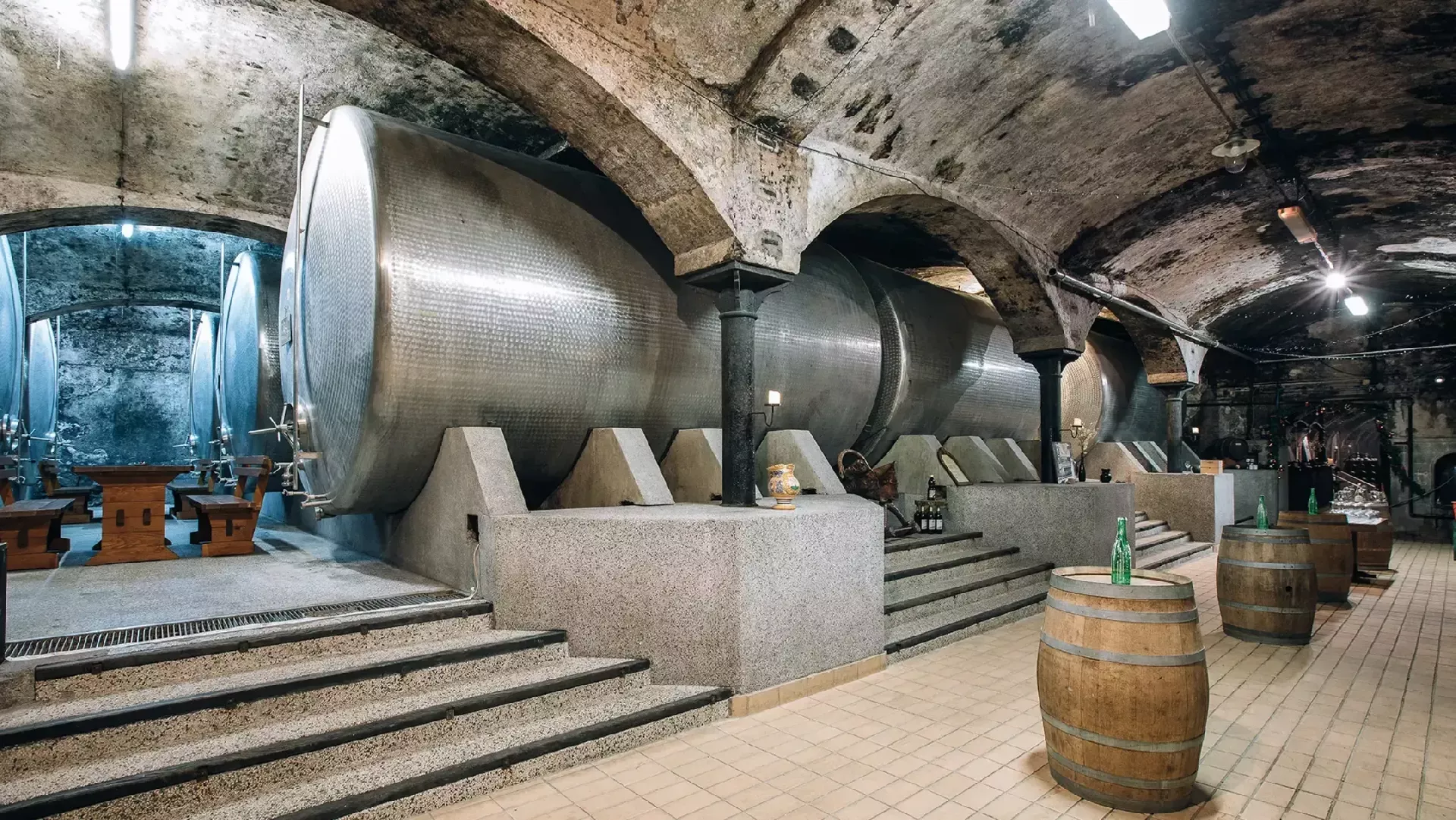
For over 450 years, the world’s oldest grapevine—officially recorded in the Guinness Book of Records—has been growing on the Lent promenade in Maribor. It still thrives today, impressing visitors from all over the world. The city is also home to another record-breaker: the largest traditional (classical) wine cellar in Central Europe, stretching impressively beneath the city center in all directions. Another major city cellar can be found nearby in Ptuj, where the oldest Slovenian wine, dating back to 1917, is carefully stored.
Sparkling wine lovers will find the most complete experience in Gornja Radgona, the birthplace of Slovenian sparkling wine. The first Slovenian sparkling wine was produced here in 1852, an achievement reported even in Bleiweis’ Agricultural and Artisan News. Another remarkable feature of the region are the terraced vineyards of picturesque Jeruzalem and the exceptionally steep vineyards of the Haloze hills—both creating outstanding wine stories.
The region produces Slovenia’s most delicate and aromatic white wines, and it is also renowned for its world-class sweet wines.
Red wines are less common, but Pinot Noir and Blaufränkisch (Modra Frankinja) are increasingly gaining recognition and showing great promise.
The main winemaking centers are: Maribor, Ptuj, Gornja Radgona, Ormož, Ljutomer, Slovenske Konjice, and Slovenska Bistrica.
The Štajerska Slovenija wine-growing district is composed of the following sub-districts which are described below:
LJUTOMER-ORMOŽ
MARIBOR
RADGONA-KAPELA
HALOZE
SREDNJE SLOVENSKE GORICE
ŠMARJE-VIRŠTAJN
JERUSALEM, TERRACED VINEYARDS AND ŠIPON
The Ljutomer–Ormož sub-district is one of the central and also the largest sub-districts of Štajerska Slovenija. It is located in the eastern part of the district. To the east it borders Croatia, to the south the Drava Valley, to the north the Mura Valley, and to the west the Srednje Slovenske Gorice sub-district.
Ljutomer and Ormož are important traditional wine-growing centres. At the end of the 1960s, large and modern wine cellars were built in both towns.
Vineyards are planted on picturesque hills rising between 250 and 341 metres above sea level (Jeruzalem). They grow on steep slopes that ensure excellent sun exposure. The close proximity of the Pannonian Plain results in higher temperatures—this is the warmest and driest part of Štajerska. Soils are light, sandy-loamy, marl-based and well-drained.
The sub-district is known for its scenic terraces around the village of Jeruzalem and for the high concentration of exceptional vineyard sites that enable the production of rich wines. A particular speciality is Šipon (Furmint), one of the oldest varieties, which thrives exceptionally well here.
Total vineyard area in the sub-district: 1,435 ha.
Jeruzalem-Ormož wine growing sub-district. Source: Stajerska.si
THE CAPITAL OF ŠTAJERSKA, A CENTRE OF PROFESSIONAL EDUCATION AND HOME TO THE OLDEST GRAPEVINE IN THE WORLD
The Maribor sub-district is located in the northwestern part of the Štajerska Slovenija district. On this side it is bordered by the pre-Alpine hills of Pohorje, to the south by Haloze and the Šmarsko–Virštanj sub-district, to the east by the Drava Valley and Srednje Slovenske Gorice, and to the north by the Austrian wine region Südsteiermark.
The main wine centres are Maribor, Slovenske Konjice and Slovenska Bistrica.
The influence of Pohorje is strongest in this sub-district, giving the wines excellent aromatic potential even in increasingly warm vintages. Some vineyards reach up to 500 m above sea level.
Maribor is the capital of Štajerska with a rich wine-making history. The first records of viticulture date back to the 10th century. On these renowned slopes, Archduke John planted some of today’s leading grape varieties in 1822. Maribor has a long tradition of professional wine education and remains its central hub.
It is the city where the more than 450-year-old Old Vine, the oldest grapevine in the world, still thrives.
Total vineyard area in the sub-district: 1,394 ha.
More than 4km wine corridors in Wine celler under Maribor city. Source: www.selectbox.si
THE TRADITION OF SPARKLING WINES, TRAMINER AND RADGONSKA RANINA
The Radgona–Kapela sub-district borders the Mura Valley to the east, the Austrian Südsteiermark to the north, and Srednje Slovenske Gorice to the south and west.
The continental climate is influenced by the Pannonian Plain. Between gently sloping hills, fresh Alpine air meets the dry Pannonian climate. Vineyard soils are diverse, predominantly sandy-loamy and deeper.
The central town of the sub-district is Gornja Radgona, considered the Slovenian capital of sparkling wine. It was here, in 1852, that Alojz Klanjšek produced the first sparkling wine in Slovenia. Since then, the tradition of sparkling wine production has been preserved and developed, and today the sub-district is renowned for excellent sparkling wines.
In addition to sparkling wine production, the area is famous for outstanding Traminer and the variety Radgonska Ranina (Bouvier), considered an indigenous Slovenian grape.
Total vineyard area in the sub-district: 852 ha.
Radgona-Kapela wine growing sub-district, a sight for sore eyes. Source: Stajerska.si
VINEYARDS ON THE STEEPEST SLOPES
The Haloze wine sub-district borders the Drava River Valley to the north, the Croatian Varaždin wine region to the southeast, and the Maribor sub-district to the west.
The vineyards in this area grow on some of the steepest slopes in Slovenia. The scenic, strongly undulating short ridges extend in various directions, offering excellent sun exposure. Soils are predominantly marl or limestone, with a relatively shallow humus layer. Vineyards are situated between 200 and 400 m above sea level.
Haloze, located on the right bank of the Drava River, have always been closely connected to Ptuj, which has a rich wine heritage documented all the way back to Roman times. At the turn of the 20th century, Ptuj was a strong wine-trading centre with numerous influential wine merchants.
The area is traditionally known for excellent varietal wines, well-suited to the steep slopes and light marl soils.
Total vineyard area in the sub-district: 669 ha.
Wine growing on steep slopes defines Haloze wine making sub-district. Source: Stajerska.si
VITICULTURE AND NURSERY PRODUCTION
Despite covering a relatively large geographical area, the Srednje Slovenske goricde sub-district is one of the smaller sub-districts of Štajerska Slovenija in terms of vineyard area. To the east it borders the Ljutomer–Ormož and Radgona–Kapela sub-districts, to the south the Drava Valley, to the west the Pesnica Valley and further north the Maribor sub-district, while its northern boundary meets the Mura Valley.
The predominantly hilly terrain is most suitable for viticulture in its southeastern part. Vineyards are very dispersed, planted on lower hills with gentler slopes. The soils are somewhat heavier than in other sub-districts.
The most important wine centre of the area is the town of Ptuj, which has historically been a key wine-trading centre with numerous wine merchants.
In Juršinci, the first vine-nursery cooperative for Lower Styria was founded in 1906, and it remains the centre of modern grafted vine production in Slovenia. Nursery production plays a crucial role in the renewal of vineyards using high-quality planting material.
Total vineyard area in the sub-district: 501 ha.
Slovenske gorice paradise for new grapevine seedling. Source: Stajerska.si
THE SMALLEST WINE SUB-DISTRICT
In terms of total surface area Šmarje-Virštajn sub-district is a large geographical region, but together with Srednje Slovenske Gorice it is the smallest wine-growing sub-district in terms of vineyard area. A higher concentration of vineyards can be found in the southeastern part of the sub-district, around the town of Virštanj.
Until 2006, it was included as an independent district within Slovenia’s Posavje wine region.
As in other sub-districts, white wine production predominates, but this is the sub-district with the highest share of red wines in Štajerska.
Total vineyard area in the sub-district: 505 ha.
Šmarje-Virštajn wine growing sub-district maybe not so typicall for Podravje wine region, that is why was long years part of Posavje wine region. Source: Stajerska.si
Nov 26, 2025