Slovenia may be small, but its wines are gaining global attention. With over 25,000 vineyards spread across varied landscapes, winemaking here is not just an earning activity but it’s a tradition woven into the fabric of daily life.
There are three main wine regions in Slovenia: Primorska (coastal), Podravje (northeast), and Posavje (southeast). Main egions are further devided to sub-regions and each has its own microclimate, grape varieties, and specialties, making the country a fascinating destination for wine lovers.
A Winemaking tradition rooted in history
Slovenia’s vineyards date back to Roman times, where today the world’s oldest vine still bears a fruit in Maribor, ageing more than 400 years. Medieval monasteries refined winemaking, and by the Habsburg era, Slovenian wines were already respected in Vienna and Central Europe.
Today, Slovenia produces about 60 million liters of wine annually, most consumed domestically. For Slovenians, wine is not just a drink but a social ritual, present at holidays, harvests, and family gatherings.
Primorska – Sun-kissed mediterranean wines
In western Slovenia, Primorska stretches along the Italian border and Adriatic coast. Its sunny slopes and mild climate give wines depth and Mediterranean character.
Goriška Brda – Known as Slovenia’s Tuscany, among other brends producing crisp Rebula, elegant blends, and Merlot.
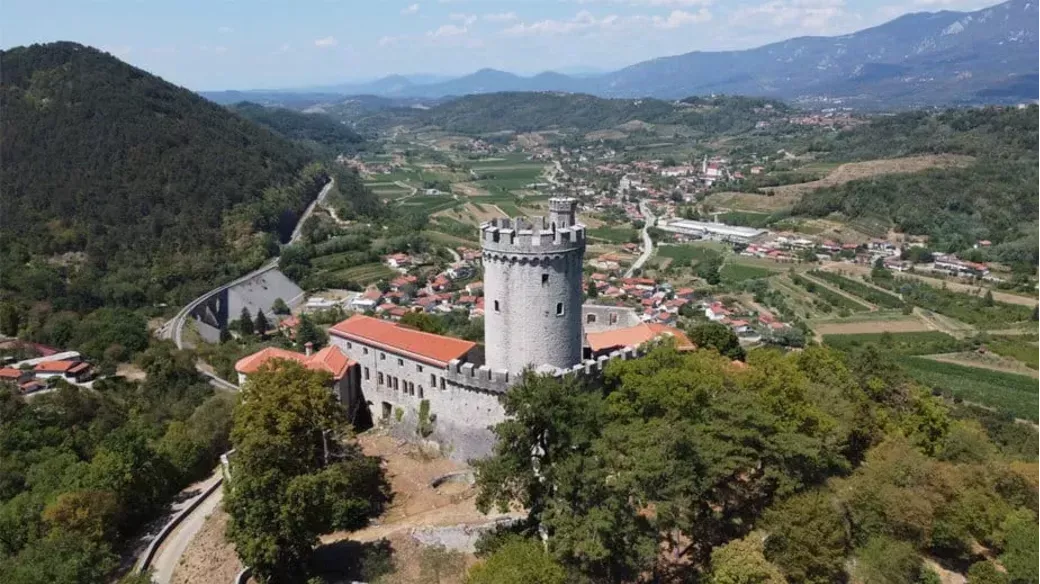
Vipava Valley – Famous for its orange wines, where white grapes ferment on their skins, producing amber color and rich flavors.
Vipava valley with its old castle. Source: Vnaravo.si
Slovenska Istra – Home of Refošk and Malvazija, two iconic coastal wines.
Karst plateau – The birthplace of Teran, a robust red grown in iron-rich red soil.
👉 Tip for travelers: Many wineries here are family-owned. Tastings often include olive oil, pršut (prosciutto), and a warm welcome.
Podravje – The heart of aromatic whites
Northeastern Slovenia is dominated by the Podravje region, where cooler climates produce delicate and aromatic wines.
Šipon (Furmint) – A versatile white, crisp and refreshing.
Traminer – Richly aromatic, with notes of spice and rose.
Laški Rizling (Welschriesling) – Light, crisp, and perfect for daily enjoyment.
Renski Rizling (Riesling) – Known for elegance and aging potential.
Podravje also leads in sparkling wine production, made in traditional Champagne style. Radgona, near the Austrian border, has produced sparkling wines in natural caves since the 19th century.
👉 Did you know? Slovenia’s first sparkling wine was bottled in 1852, making it one of the oldest traditions of its kind in Central Europe.
Posavje - Home of Cviček
Southeastern Slovenia is, best known for its most distinctive registered wine: Cviček.
Cviček – A unique, light red wine with low alcohol (8–9%) and a tangy, refreshing taste. Blended from both red and white grapes, it is unlike any other wine in Europe. Once seen as a humble farmer’s wine, today it is celebrated as a symbol of Slovenian identity.
Other wines: Posavje region also produces lighter white wines and rosés, but Cviček dominates the region’s reputation.
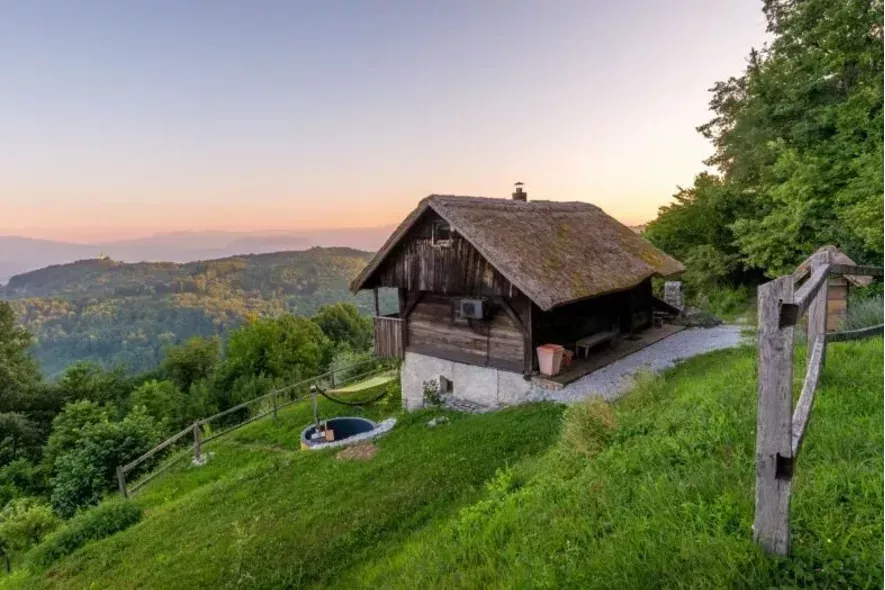
A special feature of the region is the zidanica—a small vineyard cottage where wine is made and stored. Many have been turned into guesthouses, offering travelers the chance to sleep above the wine celler and taste vines and other products produced by the host.
Vineyard cottage in Dolenjska often transformed to guest house. Source: Visitdolenjska.eu
👉 Traveler’s tip: Stay in a zidanica during harvest season (trgatev). You’ll join locals in grape picking, singing, and celebrating with homemade food.
Wine as a way of life
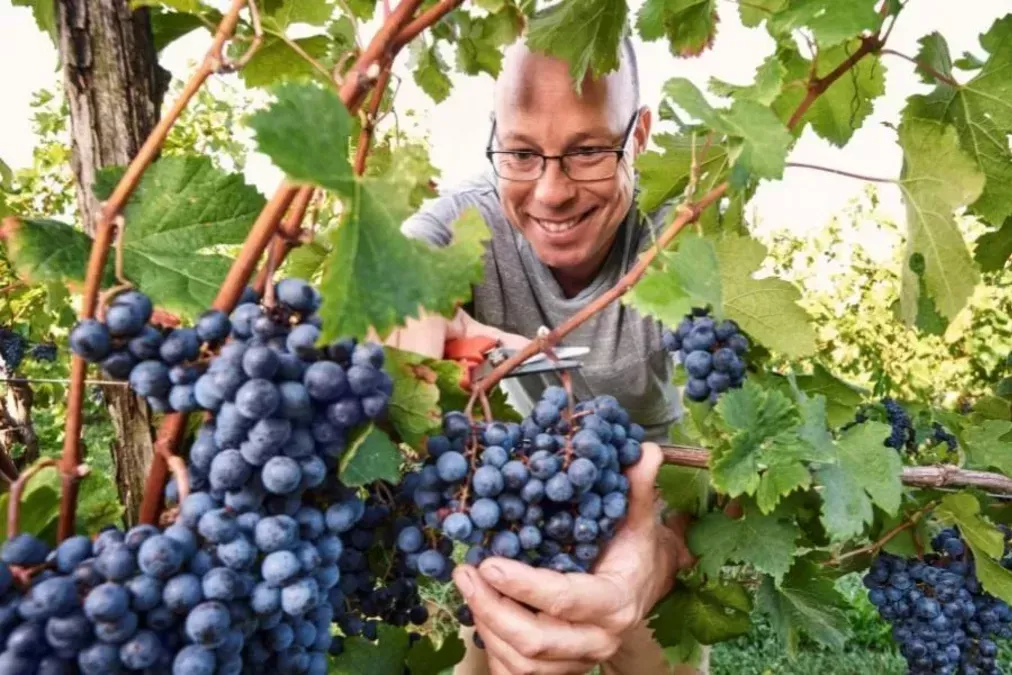
Across Slovenia, wine is tied to rituals. Harvest season is a social event where families and neighbors pick grapes together. On St. Martin’s Day (Martinovanje) in November, grape must officially “becomes” wine, celebrated with roast goose, dumplings, and plenty of toasts.
Vine grapes harvest is always a special event, routed deep in slovenian tradition. Source: Robin.si
Unlike in larger wine-producing nations, Slovenia’s scale is intimate. Most wineries are small, family-owned, and deeply personal. Visiting often means meeting the winemaker, tasting wines in a stone cellar, and hearing family stories passed down for generations.
Practical tips for wine travelers:
Best time to visit: Autumn for harvest, but spring and summer also bring beautiful vineyard landscapes.
Where to go: Goriška Brda and Vipava for whites and orange wines, Podravje for aromatic whites and sparkling wines, Dolenjska for the authentic experience of Cviček.
Pairings: Teran pairs with Karst prosciutto, Rebula with seafood, Šipon with light stews, and Cviček with sausages or everyday meals.
How to explore: Slovenia has designated wine routes that connect wineries, inns, and tourist farms.
Slovenia on the global wine map
Slovenia exports only a fraction of its wines, which makes discovery all the more special for visitors. Yet sommeliers worldwide increasingly list Slovenian bottles, especially natural and orange wines from Primorska. Awards and international reviews are bringing well-deserved recognition.
For wine lovers, Slovenia is still an insider’s secret—a place where tradition meets innovation, where every bottle has a story, and where hospitality is poured as generously as the wine.
👉 From the Mediterranean terraces of Primorska to the aromatic hills of Podravje and the vineyard cottages of Dolenjska, Slovenia offers a world of wines in a land you can cross in just a few hours. Each sip is not only a taste of the grape, but of the soil, the climate, and the people who have nurtured this tradition for centuries.
Sep 09, 2025