High in Slovenia’s Alps, where winters are long and summers short, food has always been about survival, strength, and warmth. The cuisine of the mountains reflects the landscape itself—rugged, simple, yet full of character. Shepherds, dairy farmers, and villagers in remote valleys created dishes that were filling and practical, relying on grains, potatoes, cabbage, and above all, milk and cheese. Today, these Alpine foods are cherished not only for their heartiness but also for their authenticity, offering travelers a taste of life in harmony with nature.
Life in the high pastures
For centuries, shepherds moved their herds to high alpine pastures each summer, a tradition still alive in places like Velika planina, Pokljuka, and the pastures around Bohinj. Living in simple wooden huts, they relied on what was at hand: fresh milk, flour, and whatever they could forage.
The star of this diet was always cheese. Sheep and cows provided milk that was quickly transformed into wheels of sturdy mountain cheese. Hard, slightly tangy, and long-lasting, it was an ingredient that sustained shepherds through the season and provided income when sold in valleys. Bohinj and Tolmin remain famous for their cheeses, many of which are protected by EU designations of origin.
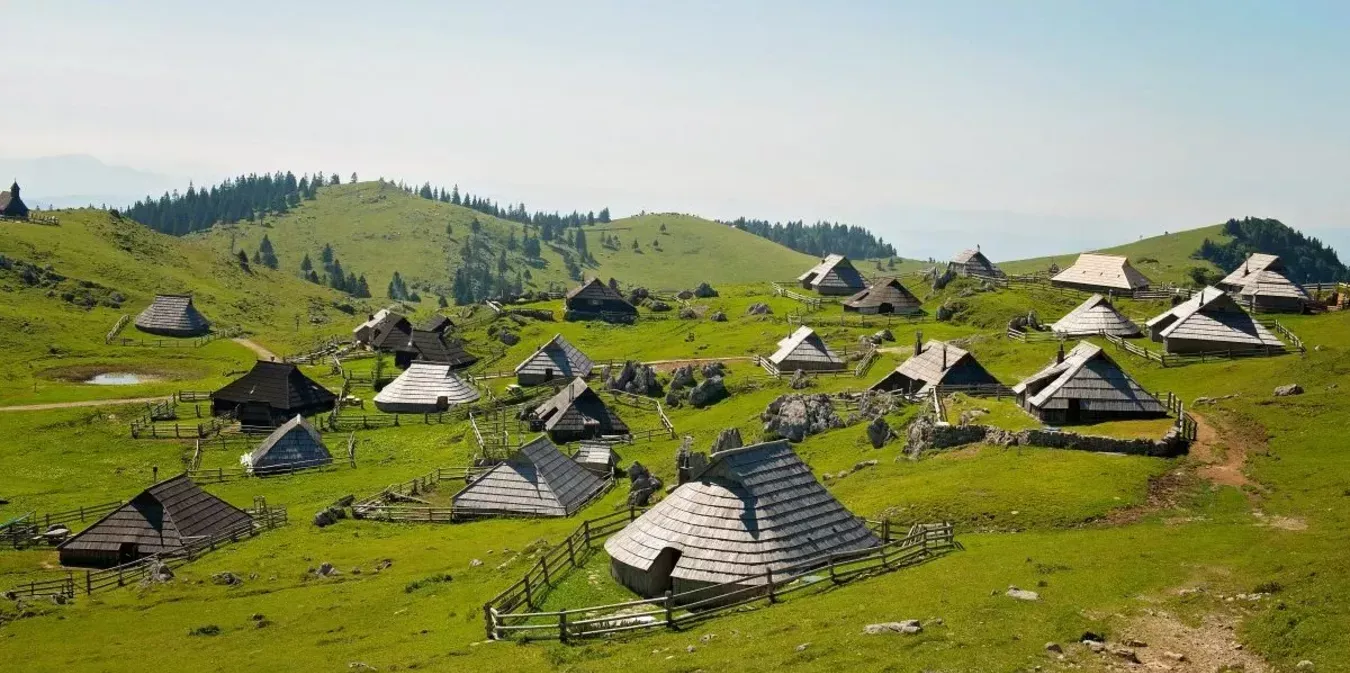
Velika planina tourned in the past necessary mountain pasture into tourist destinations, where guests are served with traditional cousine. Source: Velikaplanina.si
Alongside cheese came sour milk—fermented dairy that was refreshing and full of nutrients—and butter, which flavored porridges and breads. Even today, many hikers stop at shepherd’s huts to enjoy a simple meal of fresh bread, cheese, and sour milk, tasting the same foods that nourished generations.
Hearty alpine staples
Mountain cuisine is designed to be filling, giving strength for farm work or long days of herding. Dishes are often simple, but each carries the taste of tradition.
One essential dish is žganci, made from buckwheat or corn flour, stirred into boiling water until crumbly. Žganci are best enjoyed with milk, mushroom sauces, or topped with cracklings, though today many restaurants serve lighter versions.
Another classic is ričet, a thick barley stew enriched with beans, root vegetables, and sometimes smoked meat. Even without meat, it is deeply satisfying, a perfect example of how Alpine cousine turns humble ingredients into comfort.
Potatoes, introduced later in history, became a cornerstone of mountain diets. Boiled, baked, or mashed, they often accompany sauerkraut or sour turnip. In some valleys, they are baked into casseroles with onions and cream, creating filling dishes ideal for cold nights.
Soups and stews for survival
Alpine Slovenia has a long tradition of soups and stews, the kind of one-pot meals that could simmer while people worked outdoors. Jota, perhaps the most famous, combines sauerkraut, beans, potatoes, and sometimes a bit of pork. It is sour, smoky, and warming, the perfect antidote to mountain cold.
Mushrooms from the forests add another layer to the cuisine. Porcini and chanterelles find their way into creamy soups or sauces, served with dumplings or bread. In autumn, mushroom foraging remains a beloved tradition, and many rural families proudly prepare soups that are as much about heritage as flavor.
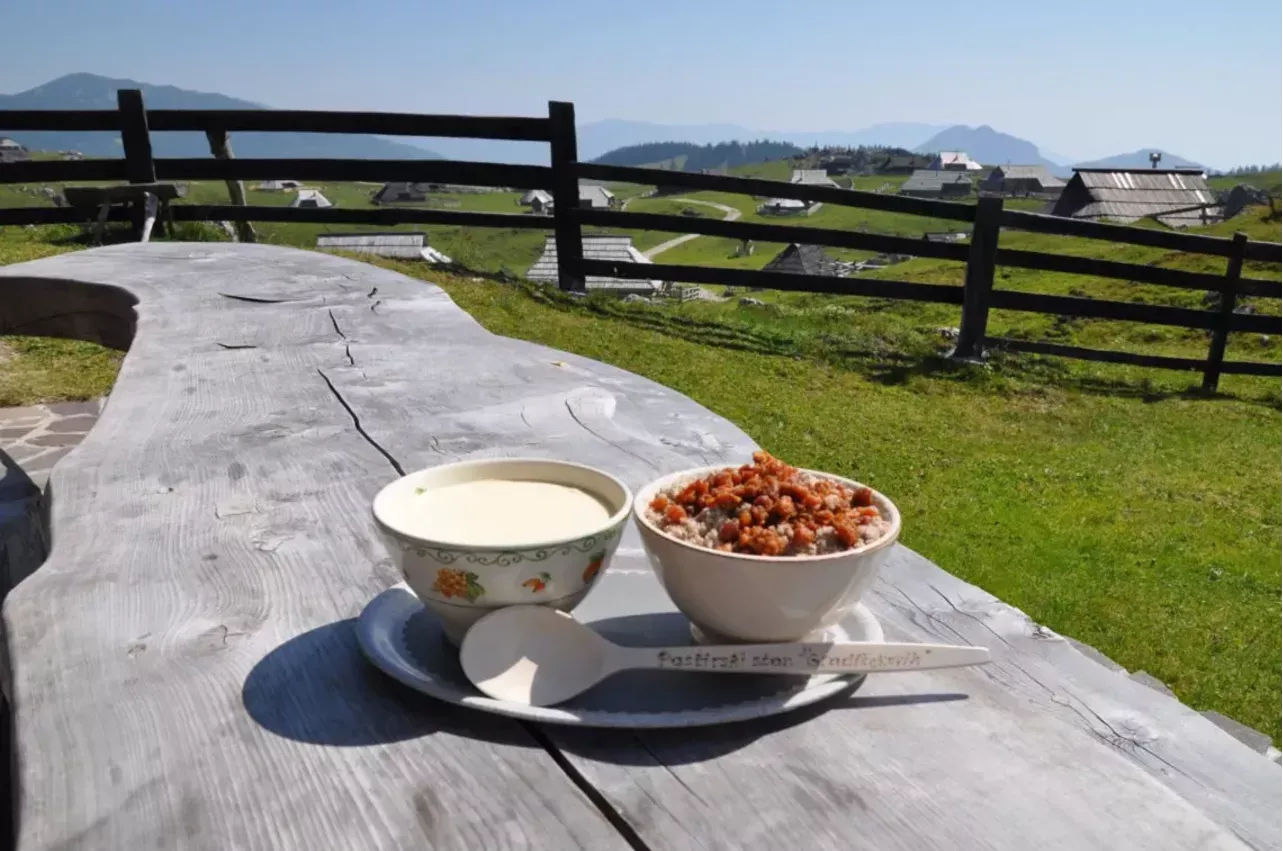
Table in the mountains, truly connects you with nature. Source: Koca.si
Shepherd’s cheese and dairy specialties
Cheese remains the crown jewel of mountain cuisine. Tolminc, a hard cow’s milk cheese from the Soča valley, has a protected designation of origin and a reputation that stretches across Europe. Bohinj cheese, equally prized, reflects the rich alpine pastures of its region.
Alongside cheese, shepherds also made skuta, a fresh curd cheese similar to ricotta, used in dumplings, pastries, or eaten simply with bread. Sour milk, yogurt, and butter all played vital roles, providing protein and energy in a diet that had to withstand harsh conditions.
For visitors today, tasting these dairy products in a shepherd’s hut is not just eating—it is stepping into a living tradition.
Celebrating and sweet tradition
Even in the mountains, special occasions called for sweeter dishes. Buckwheat flour was turned into cakes, while apples and plums from lower valleys found their way into strudels. On holidays, dumplings stuffed with fruit or cottage cheese provided treats that broke the monotony of everyday foods.
One beloved specialty is planinski sirni namaz, a spread made from fresh cheese mixed with herbs, eaten with bread and cured meats. While simple, it embodies the Alpine way of transforming minimal ingredients into something delicious.
Modern interpretations
Today, Alpine cuisine is no longer holding only survival character —it has been rediscovered by chefs who value authenticity. Restaurants in mountain towns reinterpret žganci, jota, and mushroom soups with finesse, serving them alongside local wines and craft beers. Gourmet versions of shepherd’s cheese appear on fine dining menus, paired with honey, nuts, or wild herbs.
At the same time, tourist farms and mountain huts continue to serve rustic versions, often cooked by families who have lived in the same valleys for generations. For hikers and skiers, these meals are as much a part of the experience as the mountains themselves.
Practical tips for travelers:
Exploring Alpine cousine is best done in context. Hike to Velika planina in summer, where shepherds still make cheese in traditional huts. Stop at a mountain hut in Triglav National Park for a bowl of jota or mushroom soup. Visit Bohinj or Tolmin to buy authentic cheeses directly from producers. And don’t forget to pair these foods with local drinks—apple cider in autumn, herbal teas from mountain meadows, or even a glass of hearty Cviček wine from nearby Dolenjska.
The taste of the mountains
Alpine cuisine in Slovenia tells a story of resilience and simplicity. These are disghes created to nourish people in harsh conditions, yet they have endured because they are not only practical but also deeply satisfying.
For travelers, exploring mountain cousine is more than filling your stomach—it is connecting with landscapes and traditions that have shaped Slovenian identity for centuries. A spoonful of žganci, a slice of Tolmin cheese, or a bowl of steaming jota carries with it the echoes of shepherds, farmers, and families who lived in harmony with the mountains.
👉 In Slovenia’s Alps, food is not fancy, but it is honest. It is food that gives strength, tells stories, and invites you to slow down. To eat in the mountains is to understand what it means to live close to the land—and to discover that simplicity can be the richest flavor of all.
Aug 27, 2025